If you read my previous article on why smartwatches use green lights (PPG technology), you already know those flashes measure your pulse. But today we are going one step further: How can a simple optical sensor know if you are on the verge of a burnout collapse or a fit of rage?
As an engineer, I am fascinated by how we convert biometric data into emotional interpretations. Here is the science behind the stress monitor.
The Key is Not the Pulse, It’s the Variability (HRV)
Many people think the watch measures stress simply by checking if your heart is beating fast. It is not that simple. The magic happens in Heart Rate Variability (HRV).
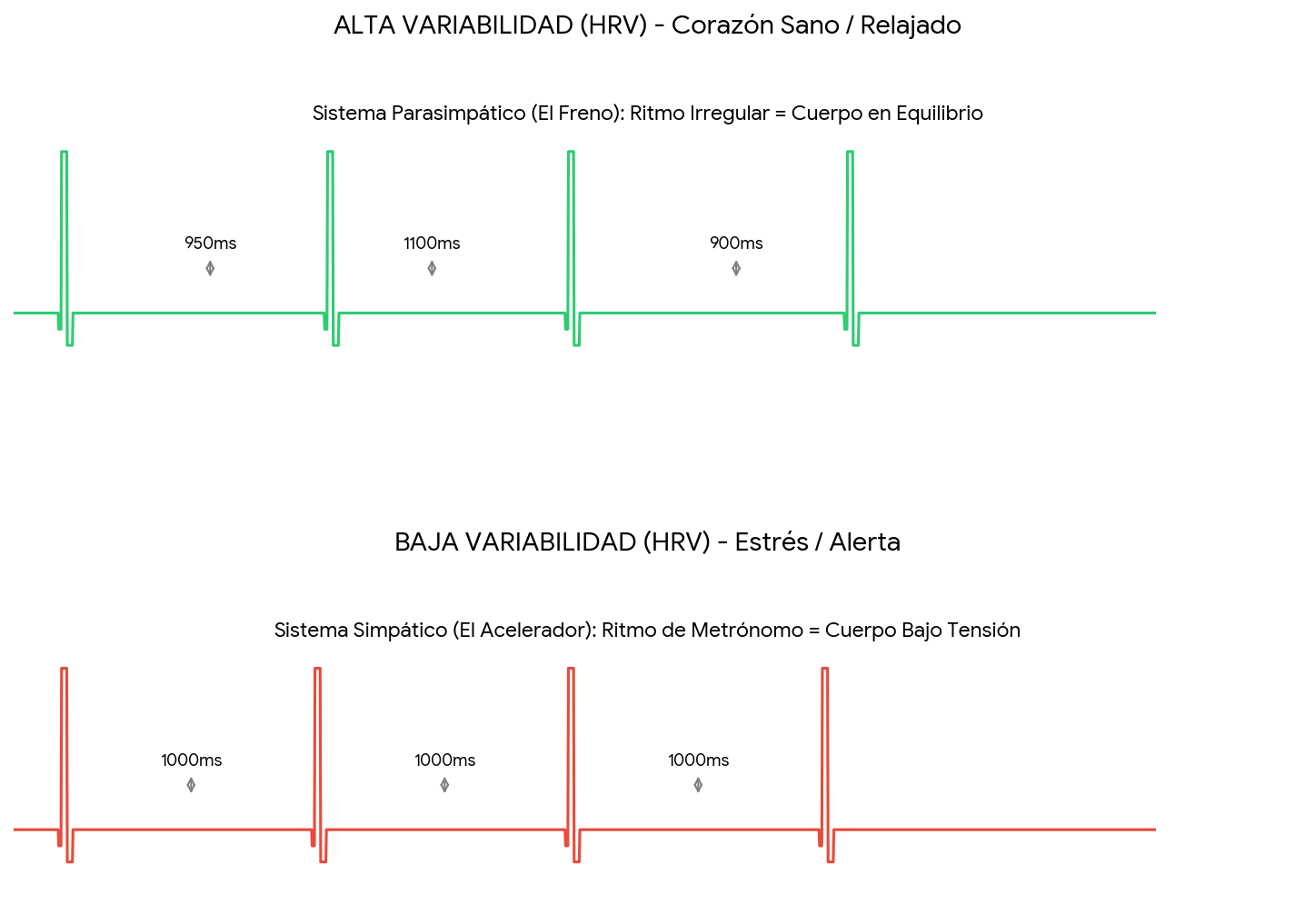
Paradoxically, a healthy and relaxed heart does not tick like a metronome. If your pulse is 60 beats per minute, it does not beat exactly every 1,000 ms. Sometimes it beats at 950 ms, then at 1,050 ms. That tiny variation is a sign that your autonomic nervous system is balanced:
-
Sympathetic System (The Accelerator): Activates with stress, danger, or anger. It makes the heart rate very rhythmic and rigid (Low HRV).
-
Parasympathetic System (The Brake): Activates when looking at an aquarium or playing a board game. It increases the irregularity of the beats (High HRV). This is the signal that your body knows how to relax.
Your watch translates that “rigidity” of the heartbeats into a stress score from 1 to 100.
Is There a Limit to “Stress Units”?
There is no universal figure, but today we understand that stress is not bad by itself, but rather because of its duration.
-
The Healthy Limit: Experts suggest that we should not spend more than 2 consecutive hours at “high” levels (above 75) without a recovery period (levels below 25).
-
Anger Management: If you are prone to impulsive reactions, your smartwatch is your best preventive sensor. If you notice your stress level spikes to 80 during a meeting, it is the physical sign that your “brake” (parasympathetic system) is failing. That is the moment to apply biofeedback: breathe, or if you can, engage in a relaxing activity. In my case, I would look at my aquarium for 5 minutes.
Board Games and Aquariums as Therapy
It has been proven that activities requiring mindfulness without extreme competitiveness (like aquarium keeping) or those fostering tactical socialization (board games) activate the vagus nerve.
When you play or care for your pets, your HRV increases almost immediately. You are hacking your own biology. The watch simply confirms what your body already feels: stress is going down.