
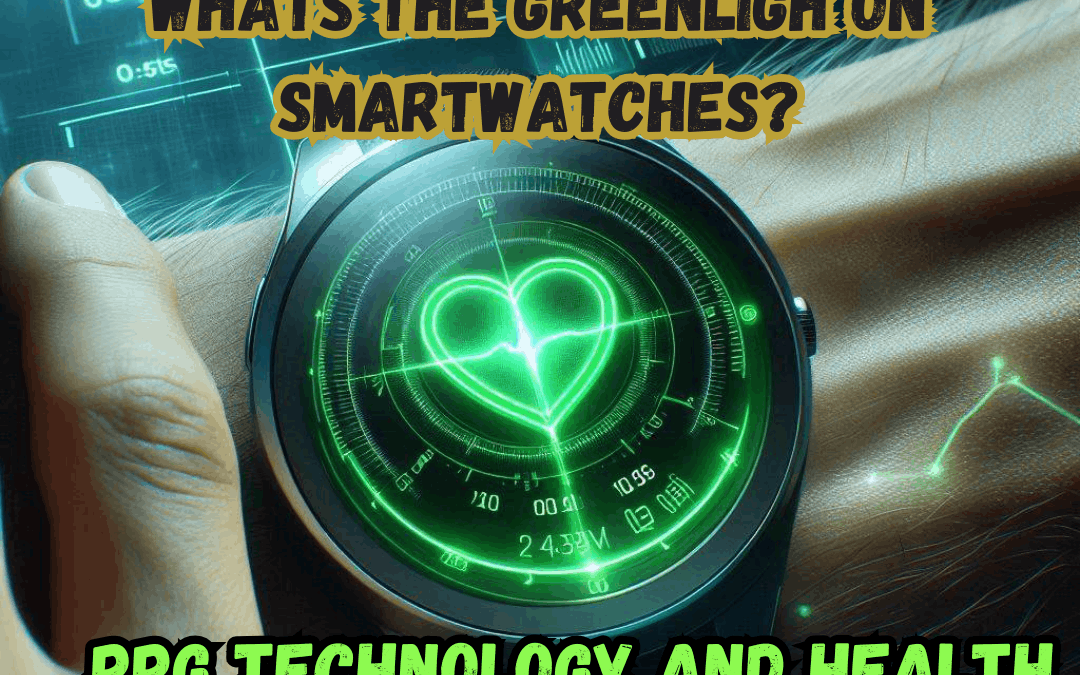
If you have ever worn a smartwatch, you have probably noticed a flashing green light on its underside. This light is not just a design detail; it is an advanced technology tool that measures your heart rate. In this post, we explain how this innovation works and why it is key to monitoring your health.
What Is the Green Light on Smartwatches?
The green light you see on your smartwatch is part of a technology called photoplethysmography (PPG). This simple yet effective method detects changes in blood flow beneath your skin, allowing your watch to measure your heart rate accurately.
Photoplethysmography (PPG): The Science Behind the Green Light
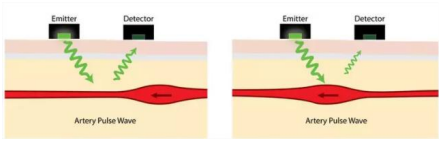
PPG works by emitting green light onto your skin and measuring the amount of light reflected back. When your heart beats, blood flow increases, absorbing more green light. Between beats, absorption decreases. These changes are detected by photodiodes in the smartwatch, which calculate your heart rate hundreds of times per second.
Why Green Light and Not Another Color?
Green light is ideal for this purpose because blood, which is red, absorbs green light very effectively. This allows smartwatch sensors to precisely detect fluctuations in blood flow.
How Smartwatches Measure Your Heart Rate
Modern smartwatches are equipped with green LEDs and photodiodes that work together to measure your heart rate. These devices emit and detect light hundreds of times per second, providing precise data on your cardiovascular health.
Beyond the Watch: The Green Light in Your 2025 Daily Life
While the flashing green light is most famous on the wrist, photoplethysmography (PPG) technology has already taken over other devices we use daily. By 2025, the trend is clear: health monitoring is environmental and integrates into everything we wear.
Here are some examples of where else it is appearing:
-
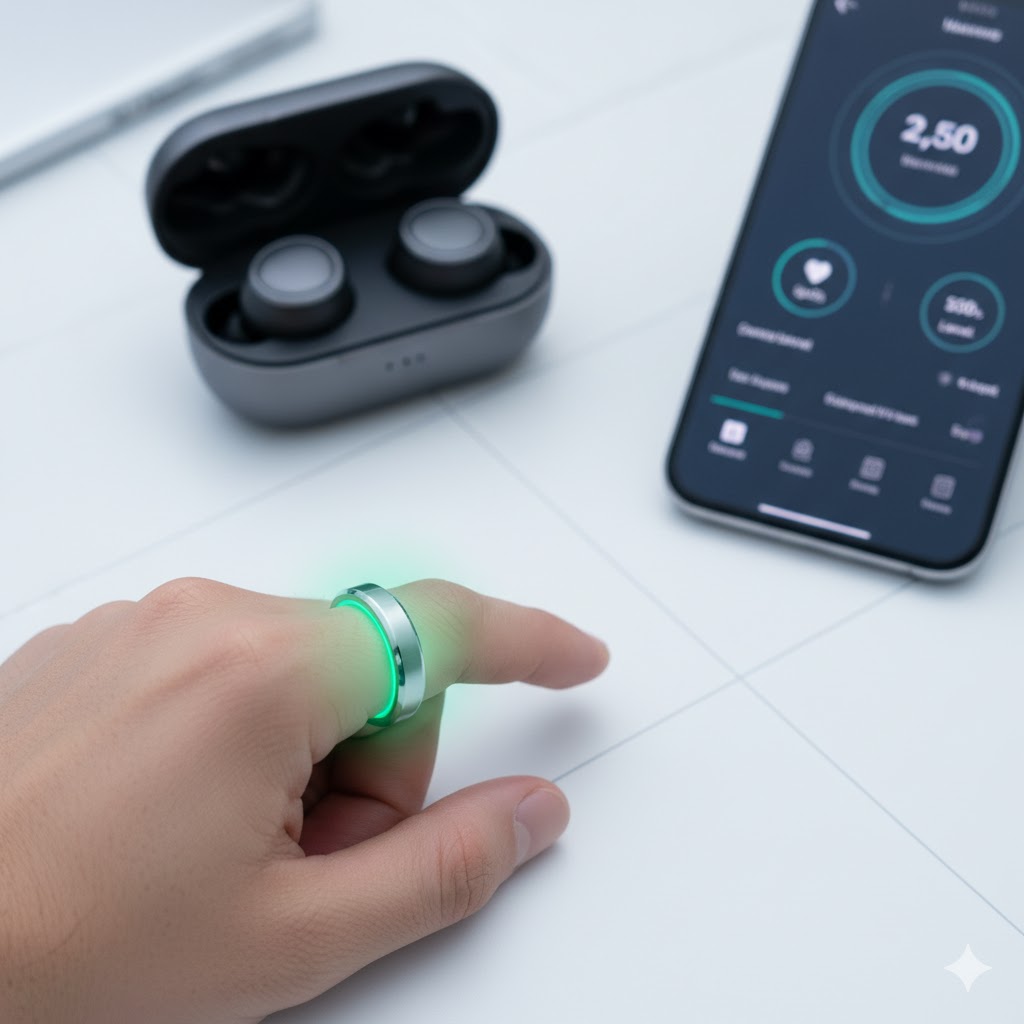
Smart Rings: They are the natural evolution of wearables. Devices like the Oura Ring or the Circular Ring 2 use PPG sensors (both green and infrared) to measure heart rate, heart rate variability (HRV), and oxygen saturation (SpO2) directly from the finger, offering highly accurate data, especially during sleep.
-
Smart Earbuds: Brands like Jabra and others have integrated PPG sensors directly into earbuds. The inner ear is an excellent place to measure pulse and body temperature with high precision, turning your music headphones into a health monitor during your workouts.
-
Remote Monitoring (rPPG): This is the most futuristic trend of 2025. Known as “remote PPG” (rPPG), it uses your smartphone camera or even a webcam. By analyzing micro-changes in color on your face, software can determine your heart rate and stress levels without ever touching you. It is already being integrated into wellness apps and telemedicine.
💡 Recommended reading: Don’t just stay on the surface. Now that you know why your watch glows, discover how to hack your nervous system using that same data in my article: [PPG and Stress: How your watch detects when you need a break].
P.S. Speaking of battle-tested tech, if you are looking for a laptop this season, I wrote my 3-year review of the ASUS TUF F15. And if you are into development, here is my take on how GitHub Copilot helped me code with ADHD.
Conclusion
The green light on your smartwatch is more than just a simple indicator; it is a window into your cardiovascular well-being. By understanding how this technology works, we can better appreciate how wearable devices are revolutionizing our health tracking. If you want to know more about how smartwatches can improve your life, feel free to explore our post on smartwatches and health.